
Genetic assessment after a missed miscarriage
Learning that your pregnancy has stopped developing can bring sadness, confusion, and the question: could I have done anything differently? Often, development stops because of a random chromosomal change unrelated to anything you did or didn't do.
If you would like to investigate a possible cause, we can help you choose appropriate tests and explain what the findings may mean as you plan another pregnancy.
Testing options can be discussed after your first pregnancy loss.
Not every question will have an answer, but you do not have to plan your next steps alone.
Treatment, testing and support in one center
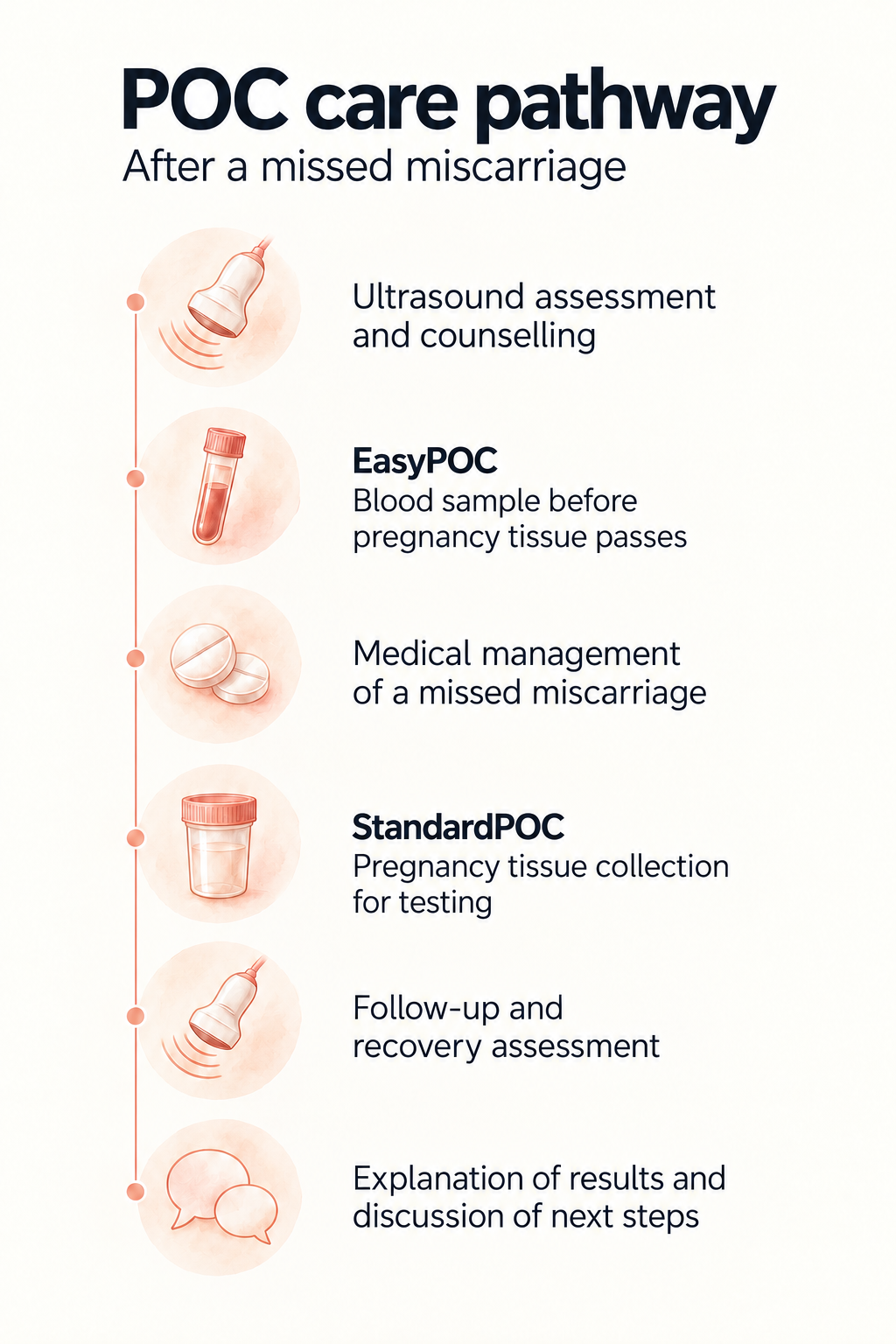
We offer a POC care pathway that brings together ultrasound assessment and counseling, EasyPOC and StandardPOC genetic testing, medical management of missed miscarriage and follow-up. We provide guidance on collecting pregnancy tissue and explain the test results to help you plan your next steps.
What can genetic testing tell you?
These tests help assess whether a chromosomal change may have caused the pregnancy to stop developing. They are available as part of the care pathway or separately.
-
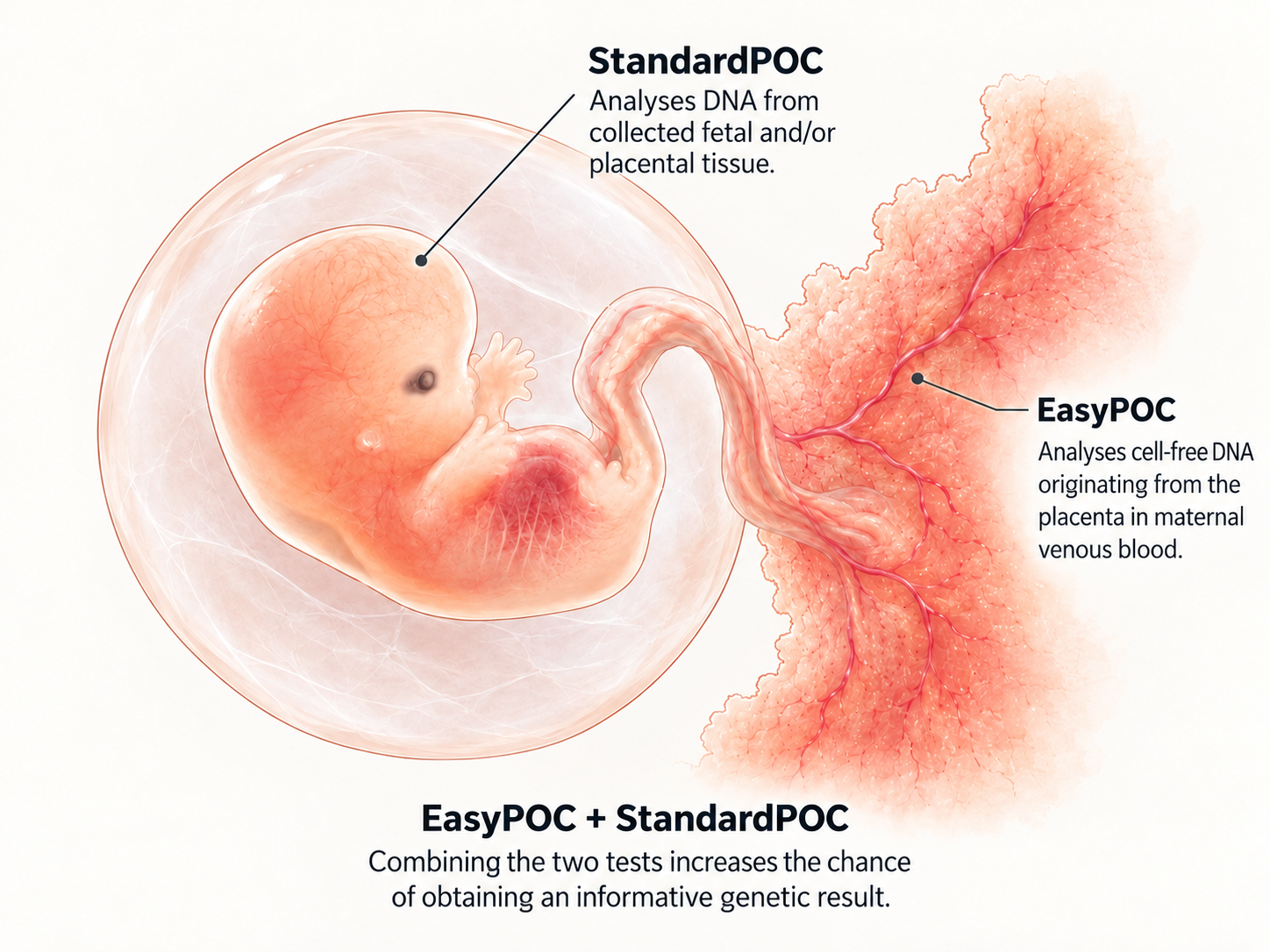
EasyPOC requires only a blood sample from the mother’s vein. Placental cell-free DNA can be analyzed from 7 weeks of pregnancy onwards, before the pregnancy tissue passes. No pregnancy tissue needs to be collected.
-
Standard POC analyses fetal and/or placental tissue collected after the pregnancy tissue passes. Testing is also possible before 7 weeks of pregnancy, provided that enough suitable pregnancy tissue can be collected. The doctor assesses test feasibility based on the ultrasound findings. You will receive a sample collection kit and clear instructions.
Combining the two tests increases the chance of obtaining an informative genetic result.
A chromosomal finding may help explain an individual pregnancy loss, but these tests cannot identify every possible cause.
If pregnancy losses recur
EasyPOC and StandardPOC investigate chromosomal changes, but do not detect most conditions caused by changes in individual genes, including autosomal recessive conditions. A normal chromosome test result therefore does not rule out all inherited causes.
In cases of recurrent pregnancy loss, GeneScreen Complete – parental carrier screening may be appropriate. For example, both parents may be healthy carriers of a disease-causing variant in the same gene associated with an autosomal recessive condition. If a child inherits a disease-causing variant from each parent, the child may develop the condition, which in some cases can also cause pregnancy loss. Identifying carrier status helps assess the risk of an inherited condition in a future child and plan appropriate testing.
What are the next steps?
You can find more information about individual tests in the services menu. You do not need to know which test to choose before your appointment. Contact us — we will help you understand the options and decide which approach is right for you.